
Chinese Sweet Desserts: Classic Soups and Regional Treats
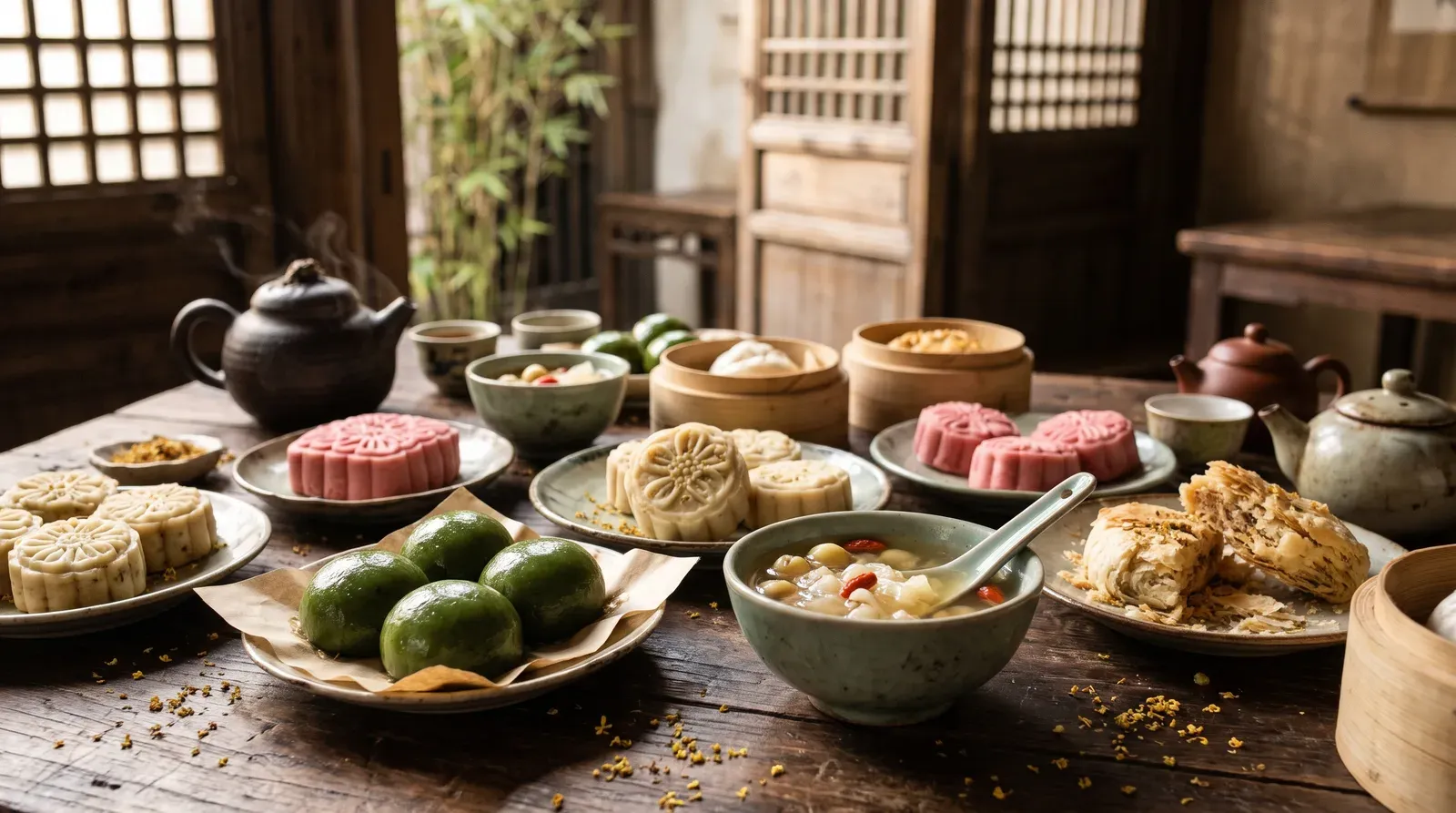
Traditional Chinese sweet desserts include Lingnan sweet soups, sticky rice cakes from the north and south, and street treats across the country. Specialized sweet soup shops appeared in Guangzhou as early as the early 20th century. In 2018, the technique of making Shunde double skin milk was officially inscribed onto the Guangdong provincial intangible cultural heritage list. Different regions follow distinct traditions in selecting ingredients and cooking methods, from steaming water buffalo milk to rolling glutinous rice.
What Are the Classic Chinese Sweet Desserts?
Traditional desserts across China mainly include Cantonese sweet soups based on beans, grains, and dairy, seasonal pastries made from glutinous rice, and chilled street snacks from the southwest. These treats differ clearly in ingredient pairings, hot or cold serving styles, and shaping techniques, as outlined in the table below.
| Dessert | Origin or Popular Region | Core Ingredients and Technique | Serving Style and Texture |
|---|---|---|---|
| Shunde Double Skin Milk | Daliang, Shunde, Guangdong | Water buffalo milk, egg whites, and sugar, forming two layers of milk skin in sequence | Served hot or cold, rich milk aroma with a silky smooth base |
| Mango Pomelo Sago | Hong Kong | Mango flesh, pomelo sacs, sago, coconut milk, and evaporated milk | Served chilled, sweet and tart with refreshing fruit sacs |
| Black Sesame Paste | Guangdong and Hong Kong | Black sesame freshly ground and simmered over low heat, often paired with tangyuan | Served hot to warm the stomach or chilled when temperatures rise |
| Ginkgo, Tofu Skin, and Barley Sweet Soup | Guangdong and Hong Kong | Tofu skin simmered with white rock sugar, paired with ginkgo nuts, barley, or hard-boiled eggs | Served hot or cold, light and smooth |
| Northern Yuanxiao | Northern China | Hard solid sweet filling cubes dipped in water and rolled repeatedly in dry glutinous rice flour | Boiled in hot water, resulting in a thick soup |
| Southern Tangyuan | Southern China | Glutinous rice dough wrapped around soft sweet or savory filling and rolled into balls | Boiled in hot water, with a smooth, chewy skin and clear soup |
| Lüdagun (Rolling Donkey) | Beijing (traditional Manchu pastry) | Glutinous rice dough rolled with red bean paste, coated in roasted soybean flour and sliced | Chewy, sweet, and coated in fragrant soybean flour |
| Qingtuan | Jiangnan region | Mugwort or barley grass juice mixed with glutinous rice flour, filled with sweet red bean paste or sesame | Glossy green, chewy, with a fresh herbal aroma |
| Sachima | Traditional Manchu pastry (popular nationwide) | Fried puffy dough noodles mixed with thick sugar syrup, pressed flat, and sliced | Soft, sweet, and suitable for daily tea pairing |
| Bingfen (Ice Jelly) | Southwest China (Sichuan, Guizhou, Yunnan) | Nicandra physalodes seeds rubbed in water to set into jelly, served with brown sugar syrup, hawthorn flakes, and goji berries | Chilled summer street snack, clear and refreshing |
| Douhua (Tofu Pudding) | Multiple regions nationwide | Sweet with ginger brown sugar syrup in South China, savory with gravy in North China, spicy with chili oil in Southwest China | Sweet, savory, or spicy depending on the region |
| Hong Kong Egg Tart | Hong Kong | Shortcrust pastry filled with smooth egg custard and baked | Served hot, flaky and tender, commonly found in cha chaan tengs |
Tip: If you travel in summer, you can opt for chilled mango pomelo sago or southwestern street bingfen. When visiting shops in autumn and winter, warm, freshly ground black sesame paste or fresh egg tarts straight from the oven are good choices.
What Classic Sweet Soups and Buffalo Milk Treats Are Found in Cantonese Shops?
Cantonese sweet soup shops began specializing in Guangzhou in the early 20th century, initially serving black sesame paste, mung bean soup, almond paste, and sweet potato soup. By the 1930s, dairy-based sweet soups such as double skin milk and ginger milk curd were introduced. Among them, Shunde double skin milk originated in Daliang, Shunde, Guangdong. It is traditionally made with high-fat water buffalo milk, egg whites, and sugar. Boiling and cooling creates the first skin, and steaming with egg mixture before cooling creates the second skin.
A modern Hong Kong classic, mango pomelo sago was created in 1984 by chefs at Lei Garden in Hong Kong, using mango flesh, pomelo sacs, sago, coconut milk, and evaporated milk as its base. Ginkgo, tofu skin, and barley sweet soup is made by simmering dried tofu skin with white rock sugar for a smooth, refreshing texture. Often cooked with ginkgo nuts, barley, or even boiled eggs, it is served hot or cold and commonly enjoyed to soothe the throat and clear heat.
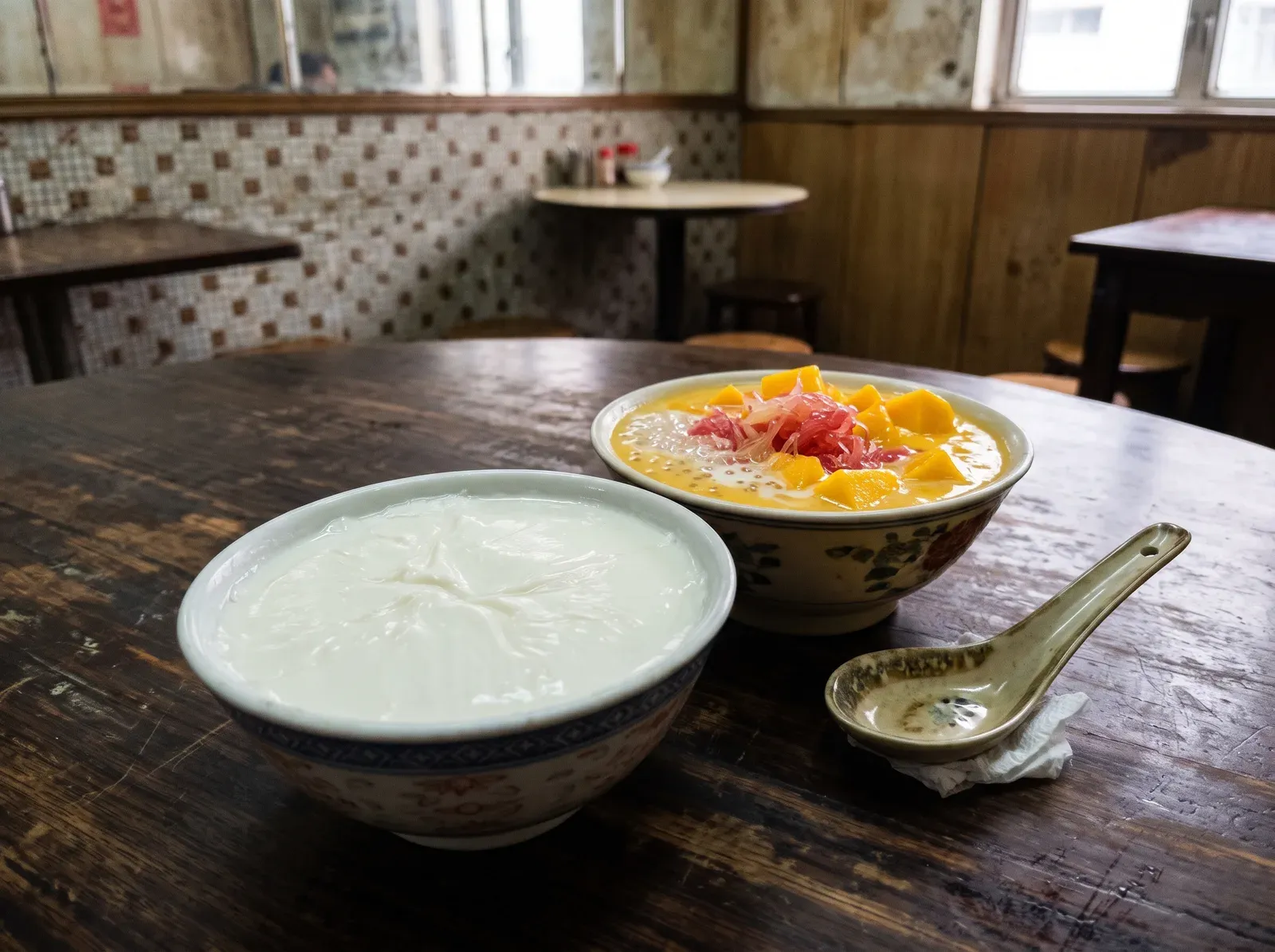
According to the Hong Kong Tourism Board, hot black sesame paste is a classic soup to warm the stomach during autumn and winter. At well-known spots such as Kai Kai Dessert, diners often add tangyuan for a double texture. Traditional Cantonese red bean soup requires slow simmering until thick and smooth. At Hong Kong dessert shops such as Luk Lam Dessert, it is commonly paired with toppings like tangyuan, ice cream, sweet potatoes, or fresh fruit.

Tip: According to the Hong Kong Tourism Board, long-established Hong Kong shop Kai Kai Dessert freshly grinds black sesame, almond, and walnut paste daily, and chilled versions are recommended when temperatures rise. If the line at the Parkes Street flagship is long, you can visit the branch on Lockhart Road in Causeway Bay to avoid the queue.
What Is the Difference Between Tangyuan and Yuanxiao?
Although northern yuanxiao and southern tangyuan are both seasonal glutinous rice foods, their preparation methods are completely different. Northern yuanxiao is made by dipping solid sweet filling cubes in water and rolling them repeatedly in dry glutinous rice flour, resulting in a thick broth when boiled. Southern tangyuan is made by wrapping soft sweet or savory filling in glutinous rice dough and shaping it into balls, producing a smooth, tender skin and a clear broth when cooked.
Qingtuan, a seasonal pastry from the Jiangnan region, originates from the ancient Cold Food Festival and Qingming solar term. Its wrapper blends fresh spring mugwort or barley grass juice with glutinous rice flour, enclosing sweet red bean paste or sesame filling into a bright green, chewy treat. Lüdagun (rolling donkey), a traditional Manchu dessert from Beijing, relies on three main ingredients: glutinous rice flour, red bean paste, and roasted soybean flour. Steamed dough is rolled with bean paste into a cylinder, thoroughly coated in roasted soybean flour, and cut into bite-sized pieces.
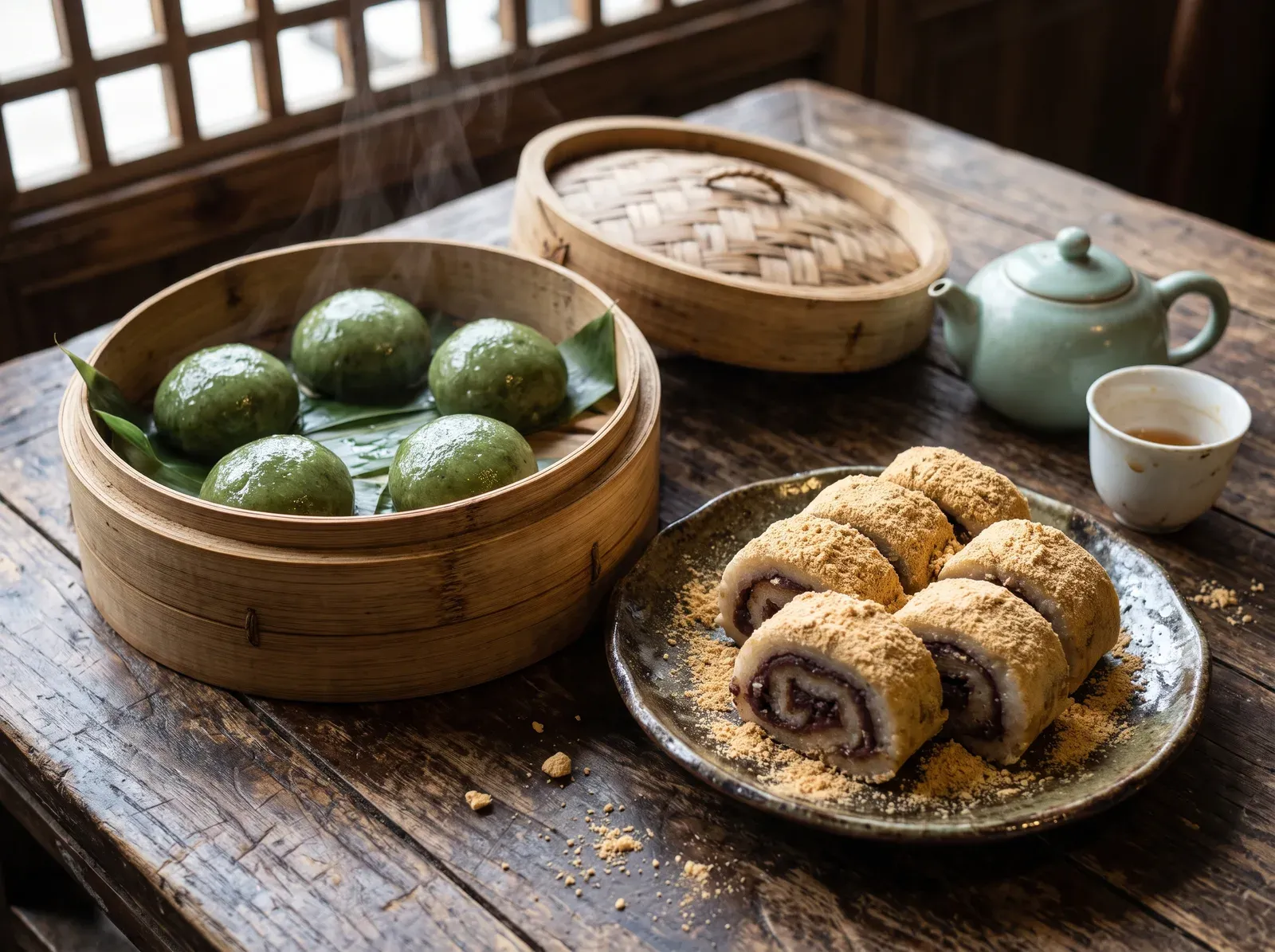
Another sweet treat popular across the country, sachima, also originates from traditional Manchu pastry making. It is made by tossing fried, puffy dough strands in thick sugar syrup, pressing them flat, and slicing them into soft, sweet bars. The snack spread widely after entering central China during the Qing Dynasty.
Tip: If you prefer a dessert with a delicate skin and clear broth, order southern boiled tangyuan. If you want to taste a pastry rich in roasted soybean aroma, try freshly rolled and sliced lüdagun.
Is Douhua Sweet or Savory, and How Are Traditional Mooncakes Sized?
Douhua in China reveals distinct regional flavor boundaries, divided into sweet, savory, and spicy styles. Southern China, Hong Kong, and Taiwan mainly serve sweet tofu pudding, often paired with ginger brown sugar syrup or sesame paste. Northern China mostly serves savory douhua topped with soy-based gravy, while southwestern areas such as Sichuan and Shaanxi season it with spicy toppings like chili oil.
Regarding Mid-Autumn festive treats, traditional Cantonese mooncakes are usually 3 to 4 centimeters thick, with a thin pastry crust measuring only 2 to 3 millimeters. Inside, they are packed with dense, smooth lotus seed paste, red bean paste, or five-nut filling alongside salted egg yolks. They are traditionally sliced into small wedges and served with hot tea to balance the richness.
In addition, according to the Hong Kong Tourism Board, Hong Kong egg tarts feature a shortcrust pastry holding tender egg custard. Commonly found in local traditional bakeries and cha chaan tengs such as Tai Cheong Bakery, they are a staple of Hong Kong afternoon tea.
Tip: Traditional Cantonese mooncakes are filling and substantial. When trying a 3 to 4 centimeter thick egg yolk lotus seed or five-nut mooncake, slice it into small pieces to share and pair it with hot tea.
How Should You Try and Pair Chinese Sweet Desserts for the First Time?
When tasting Chinese sweet desserts, you can choose based on seasonal temperatures and soup textures. If you spend summer in Southwest China (Sichuan, Guizhou, Yunnan), clear bingfen made by rubbing Nicandra physalodes seeds in water is a signature chilled street treat. Mixed with brown sugar syrup, hawthorn flakes, and goji berries, it is cool and refreshing.
If you visit a traditional sweet soup shop, mixing and matching pastes with extra toppings is also a classic custom. Adding tangyuan to hot black sesame paste, or topping slow-simmered red bean soup with ice cream or sweet potato, lets you experience different layers of chewiness and richness in a single bowl.
Sources
Tong sui - Wikipedia
Double skin milk - Wikipedia
Tangyuan - Wikipedia
Mango pomelo sago - Wikipedia
Bingfen - Wikipedia
Lüdagun - Wikipedia
Douhua - Wikipedia
Mooncake - Wikipedia
Qingtuan - Wikipedia
Sachima - Wikipedia
6 Must-Try Traditional Hong Kong Desserts | Hong Kong Tourism Board
Hong Kong’s Essential Desserts to Beat the Heat | Hong Kong Tourism Board
Sources verified on Nov 17, 2026
FAQ
Why does Shunde double skin milk form two layers of skin?
Originating in Daliang, Shunde, Guangdong, it is traditionally made with high-fat water buffalo milk, egg whites, and sugar. The first skin forms on the surface after boiling and cooling. Once the milk is poured out, mixed with egg whites, steamed, and cooled again, the second skin forms on top.
What is the difference between northern yuanxiao and southern tangyuan after boiling?
Northern yuanxiao is made by dipping solid fillings in water and rolling them repeatedly in dry glutinous rice flour, resulting in a thicker broth after boiling. Southern tangyuan wraps soft filling inside glutinous rice dough balls, producing a smooth, tender skin and a clearer broth.
What ingredients are in mango pomelo sago?
Created in 1984 as a modern Hong Kong classic, its core recipe includes mango flesh, pomelo sacs, sago, coconut milk, and evaporated milk.
What is southwest street bingfen jelly made of?
Bingfen is a signature chilled street dessert enjoyed during summer in Southwest China (Sichuan, Guizhou, Yunnan). The clear jelly is traditionally formed by rubbing Nicandra physalodes seeds in water and is served with brown sugar syrup, hawthorn flakes, and goji berries.
Can ginkgo, tofu skin, and barley sweet soup be served hot or cold?
According to the Hong Kong Tourism Board, this sweet soup simmers tofu skin with white rock sugar and can include ginkgo nuts, barley, or even hard-boiled eggs. Shops serve it both hot and cold, and it is commonly enjoyed to soothe the throat and clear heat.