
Chinese Architecture: Beijing, Datong and Pingyao
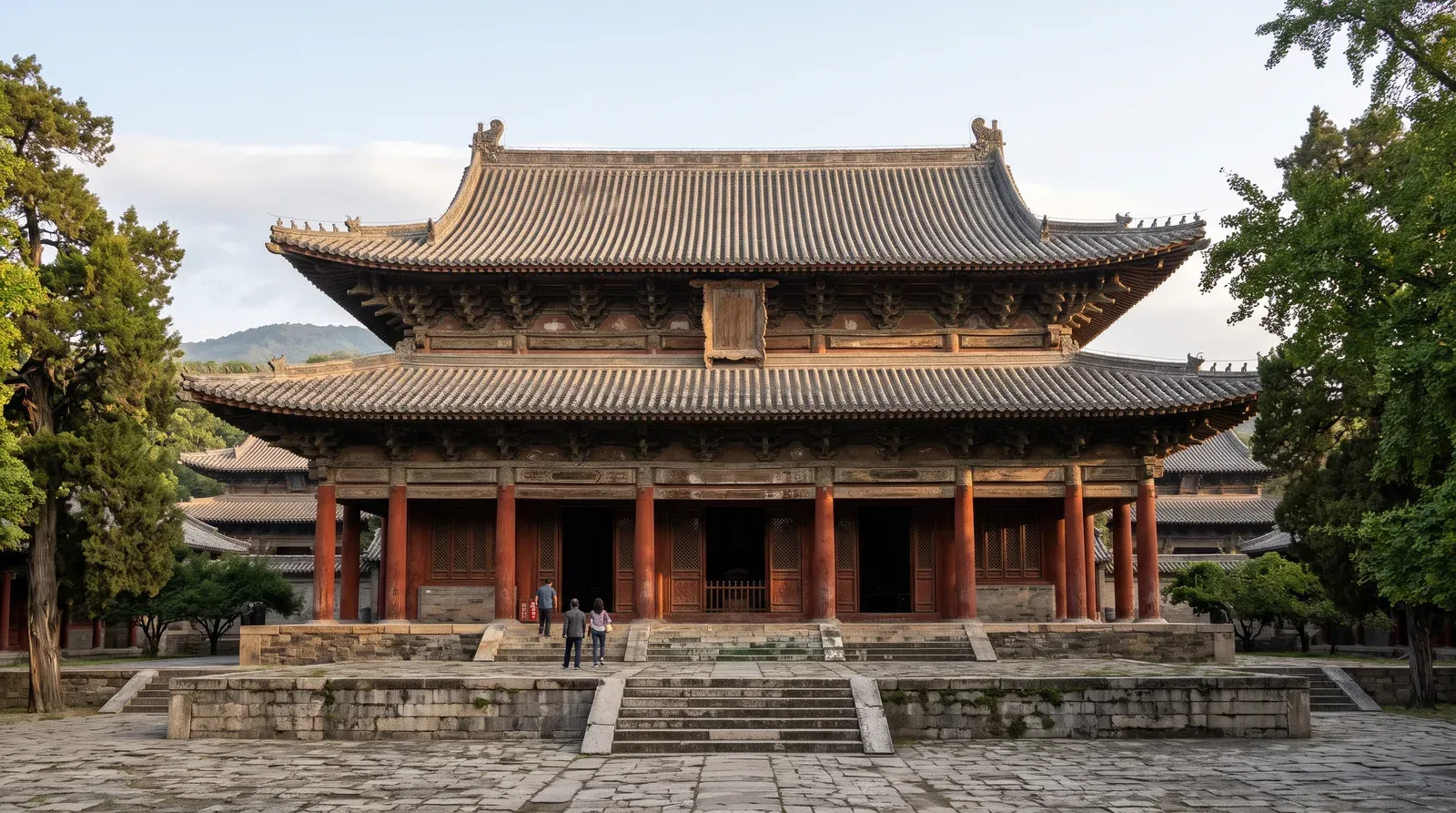
To read Chinese architecture, learn the parts first, then the cities. Once you can name dougong brackets, bays, platforms and big roofs, you know what to look at in front of any hall. Beijing's Central Axis runs 7.8 km from the Bell and Drum Towers in the north to Yongdingmen in the south, stringing Jingshan, the Forbidden City and the Temple of Heaven along one line. Datong has Liao and Jin timber halls and rock-cut caves; Pingyao has its city wall and draft banks. Three cities make one complete line.
What to Look at First in Chinese Architecture? Four Building Parts
The tiered wooden brackets that step out under the roof are dougong. They interlock layer by layer and are put together with mortise and tenon joints only, without glue, without nails or other metal fasteners.
Next, the bays. Traditional Chinese buildings stress left to right symmetry. Columns usually come in even numbers, which gives an odd number of bays, and the main door sits in the middle bay to keep the whole front symmetrical.
Third, the platform and the roof. Traditional Chinese halls give weight to horizontal mass rather than height. The building sits on a heavy platform, the big roof floats above it, and the walls are visually played down.
Fourth, the tiles. Glazed roof tiles have been used on Chinese roofs since the Tang dynasty, were standardised in the Song building manual Yingzao Fashi, and in Ming and Qing times were mostly kept for high-ranking buildings such as the palaces of the Forbidden City and ritual temples like the Temple of Heaven.
At courtyard level, northern Chinese courtyards usually open to the south, so doors, windows and walls get the most sun while the cold winter north wind stays out.
Dougong Without Nails: Why Do They Hold Up in Earthquakes?
Dougong join the vertical columns to the horizontal beams. They gather the load spread over a wide area of the beam and pass it straight down the column. Stacking several sets lowers the stress on the beams and makes the structure more elastic, so a timber building can take earthquake damage.
No part of the dougong system uses bolts, pins, screws or iron nails. Everything is held by friction at the joints and by the pressure of the load above.
Dougong were already widely used in the Spring and Autumn period, and by the Tang and Song they had grown into complex interlocking sets. After the Song, brackets on palaces and major religious buildings carried more decoration, which set them apart from the structural job of the earlier ones.
To check sizes against a text, look at the Yingzao Fashi by Li Jie of the Northern Song. The book was issued by order of Emperor Huizong in 1103, gave builders and the central works office a building standard, and sorted timber parts into eight size grades, the cai-fen system.
One example you can compare on site is the Ten Thousand Buddha Hall at Zhenguo Temple in Pingyao: its column-head and corner dougong are grade seven of the eight in the Yingzao Fashi, and the brackets stand nearly 2.5 m high, about 70% of the column height.
Beijing: How to Read the Forbidden City Group of Buildings
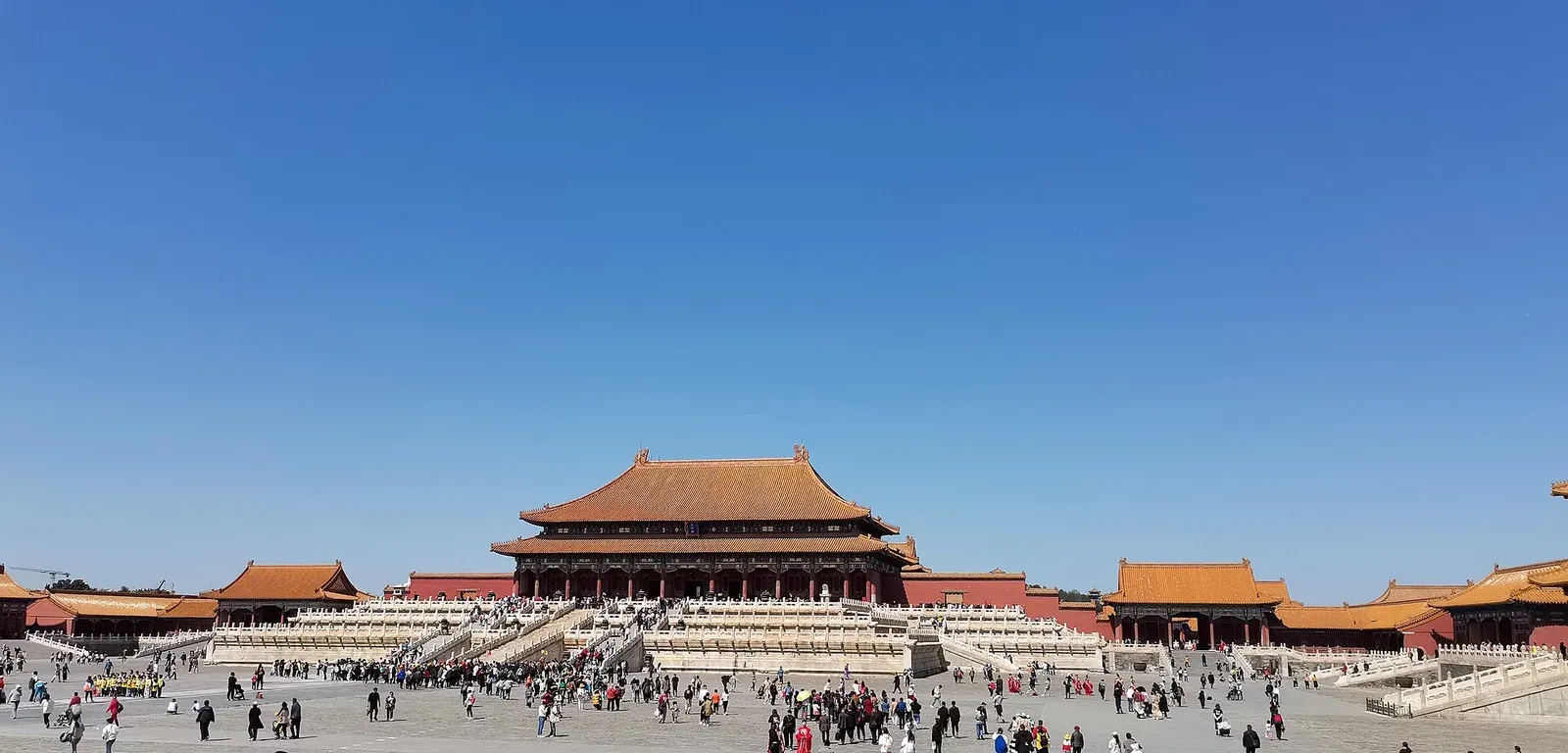
The Hall of Supreme Harmony stands about 30 m above the square around it. It is the largest surviving timber building in China and the largest hall inside the Forbidden City. The hall is 11 bays wide, with nine of them main bays, and five bays deep. It sits on a three-tier white marble platform, and the ceiling right above the throne holds a coffered panel with coiled dragons.
The hall was first built in 1421 and burned seven times during the Qing dynasty; the last rebuilding ran from 1695 to 1697. After a 16th-century rebuild its size shrank from about 95×48 m to today's 65×37 m.
From 1420 to 1924 the Forbidden City was home and seat of power for 24 Ming and Qing emperors. UNESCO lists it as the largest surviving group of ancient timber buildings in the world.
According to the Palace Museum's rules, it closes on Mondays all year except on statutory holidays, and advance booking is required. Booking opens at 20:00 seven days before your visit at the earliest. Visits run one way: the Meridian Gate is the only entrance for visitors, and you leave by the Gate of Divine Prowess on the north side or the East Glorious Gate on the east. The Treasure Gallery, where the Nine Dragon Wall is, needs a separate ticket of 10 yuan per person on top of the main ticket, which is 60 yuan in peak season and 40 yuan in low season.
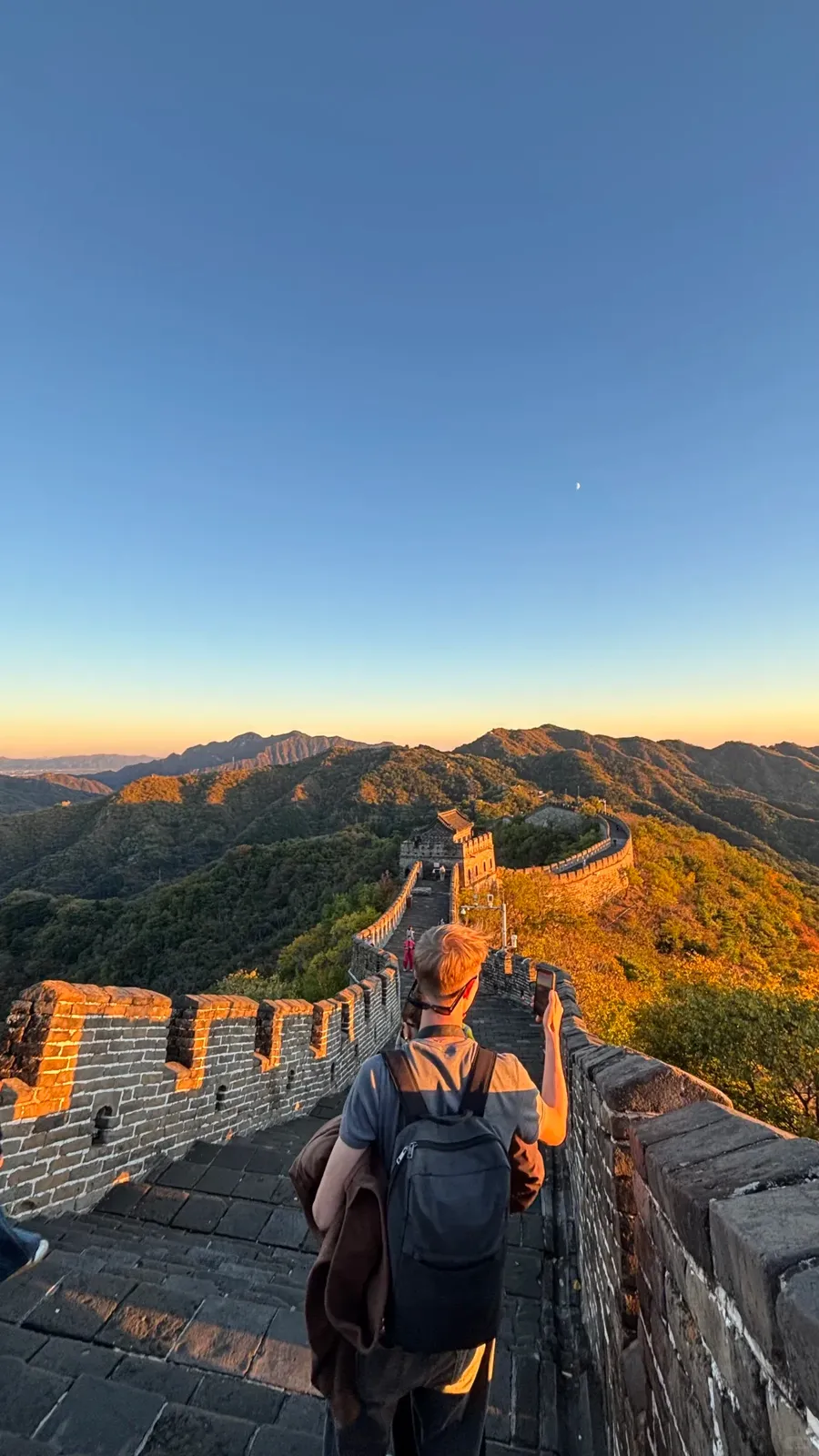
Beijing has more than the Forbidden City. The Great Wall was inscribed on the UNESCO World Heritage list in 1987; the Mutianyu stretch has walls 7 to 8.5 m high and 4 to 5 m wide at the top, with 22 watchtowers packed into a 2250 m visitor section. The Maitreya statue in the Wanfu Pavilion at Yonghe Temple is carved from one single white sandalwood trunk and stands 26 m tall in total, 18 m above ground and 8 m below, a record entered in the Guinness Book in 1993.
Why Is the Hall of Prayer for Good Harvests Round, With a Blue Roof?
The Hall of Prayer for Good Harvests has three round eaves, is 36 m across and 38 m high, and sits on a three-tier marble platform. The whole structure is timber, without nails. Inside, four inner columns, twelve middle columns and twelve outer columns stand for the four seasons, the twelve months and the twelve traditional hours of the day.
Every building in the Temple of Heaven uses deep blue glazed tiles, blue standing for heaven. The Temple of Heaven joined the UNESCO World Heritage list in 1998. It lies in the south of the city and was where Ming and Qing emperors held the annual ceremonies to worship heaven and pray for good harvests.
Opening hours split between the park and the historic zone: the Temple of Heaven Park covers 267 hectares and opens 6:00 to 22:00 daily; the historic zone inside opens 8:00 to 17:30 from April 1 to October 31 and closes at 17:00 from November 1 to March 31.
Why Does Jingshan Show the Whole Central Axis at Once?
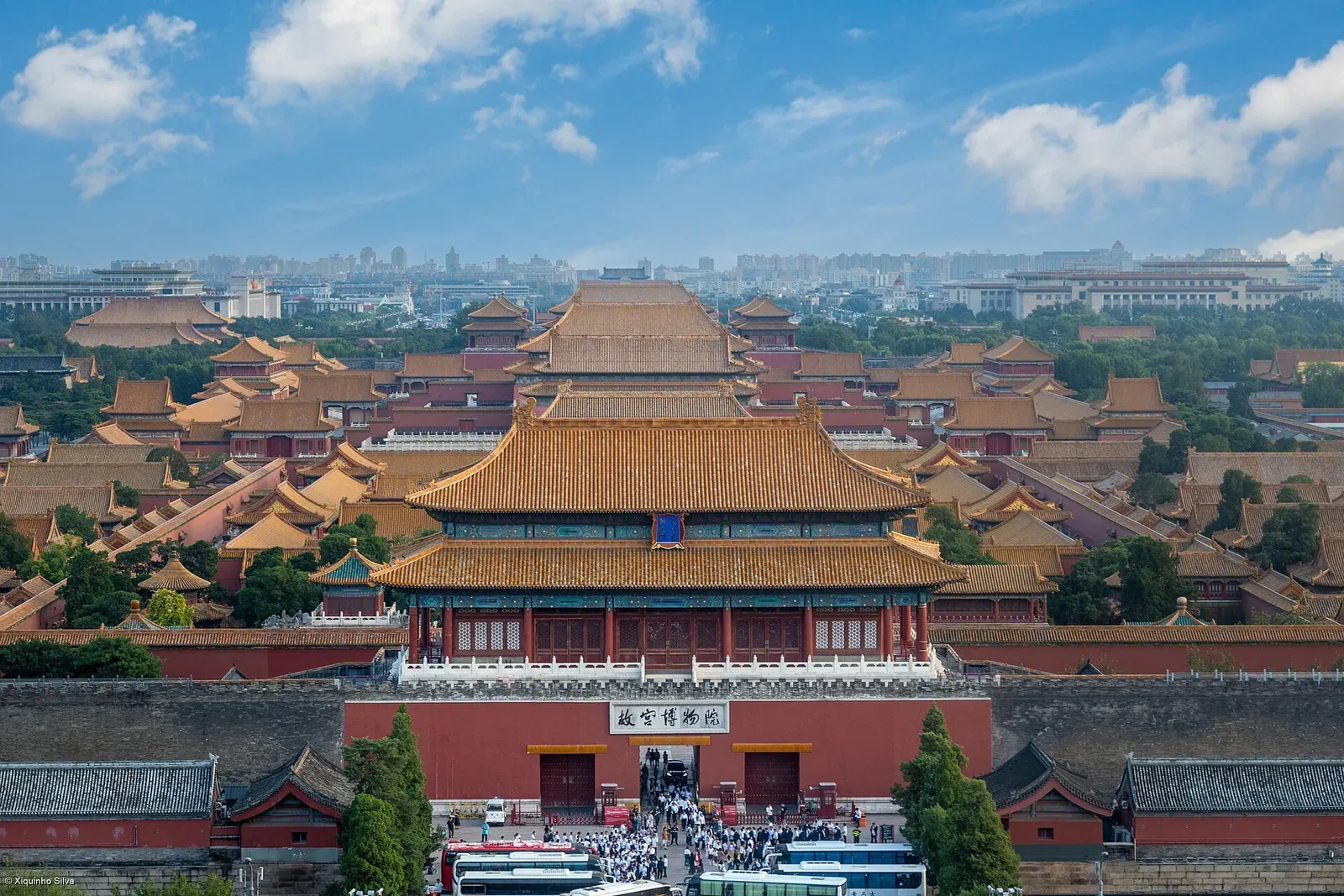
According to Jingshan Park, the Wanchun Pavilion stands at the highest point of the Beijing Central Axis, and from it visitors look down over the whole Forbidden City, take in the axis and see the imperial courtyard buildings. Jingshan itself is man-made, 89.2 m above sea level and 45.7 m above its base. It was piled up in 1420, the 18th year of the Ming Yongle reign, from rubble of the demolished Yuan palaces and soil dug from the Forbidden City moat.
The Beijing Central Axis runs 7.8 km from the Bell and Drum Towers in the north to Yongdingmen in the south, linking Jingshan, the Forbidden City, Tiananmen, Zhengyangmen and the Temple of Heaven. It is on the UNESCO World Heritage list.
Jingshan Park publishes two sets of hours. Peak season, April 1 to October 31, is 6:00 to 21:00 with last entry at 20:30; low season, November 1 to March 31, is 6:30 to 20:00 with last entry at 19:30.
Datong: Liao and Jin Timber Halls and the Grottoes, in What Order?
The Mahavira Hall at Huayan Temple in Datong faces east, is nine bays wide and five bays deep, has 1559 sq m of floor area and stands on a platform more than 4 m high. Its eaves are 9.5 m high, the roof is a hip roof, the glazed ridge ornament reaches 4.5 m, and each roof tile is 76 cm long and weighs 27 kg.
The Bojiao Zang Hall in the same temple was built in 1038, the seventh year of the Liao Chongxi reign. It is five bays wide and four bays deep and keeps 31 Liao dynasty statues.
The Mahavira Hall at Shanhua Temple is an 11th-century Liao building, seven bays wide and five bays deep (40.5×25 m), standing on a 3 m platform, with 190 sq m of murals inside. Its gate hall is a 12th-century Jin building, five bays wide and two bays deep, with 278 sq m of floor area.
Cave 6 at Yungang has an interior of about 1000 sq m, with all four walls and the ceiling fully carved and painted, and a central pillar running from the floor straight up to the ceiling. The first phase of carving at Yungang was finished by 465 AD, which is today's Caves 16 to 20.
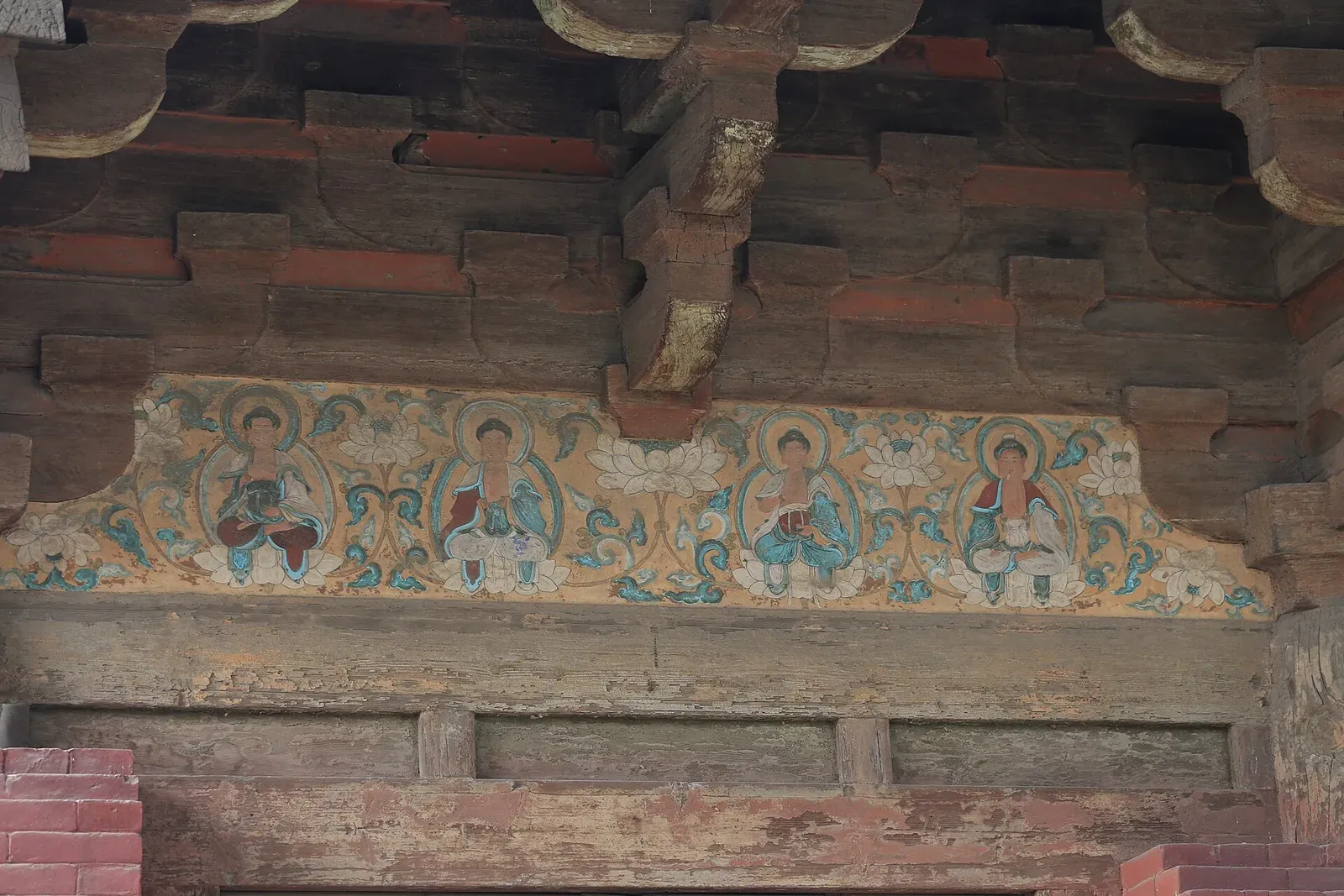
Pingyao: City Wall, Draft Banks and Painted Statues
The Pingyao city wall is about 12 m high and 6163 m around, with 72 watchtowers and more than 3000 crenellations on top, and a moat about 4 m wide and 4 m deep outside. The old city has six gatehouses with barbicans, one at the north, one at the south and two each at the east and west, shaped like a turtle's head, tail and four legs, which is why it is called the turtle city.
Rishengchang was the earliest and largest draft bank in town, handling nearly half of the silver in circulation in China in the late Qing, and it closed in 1914 after the 1911 revolution. Wood, stone and brick carving turn up everywhere in Pingyao house decoration.
Outside the city, the Ten Thousand Buddha Hall at Zhenguo Temple was built in 963, in the Northern Han of the Five Dynasties. It is three bays wide with a single-eave hip-and-gable roof, nearly square in plan at 11.6×10.8 m and 8.8 m high.
Can You Compare Dates and Sizes Across the Three Cities?
The seven buildings below are in Beijing, Datong and Pingyao and run from the Five Dynasties to Ming and Qing. Putting dates and dimensions side by side makes them easier to match once you are there.
| Building | Date | Key dimensions |
|---|---|---|
| Hall of Supreme Harmony, Forbidden City | First built 1421, last rebuilt 1695 to 1697 | 11 bays wide, 5 bays deep, about 30 m above the surrounding square |
| Hall of Prayer for Good Harvests, Temple of Heaven | Temple of Heaven inscribed by UNESCO in 1998 | Round, three eaves, 36 m across, 38 m high |
| Mutianyu Great Wall | Great Wall inscribed by UNESCO in 1987 | Walls 7 to 8.5 m high and 4 to 5 m wide at the top, 22 watchtowers in the 2250 m visitor section |
| Bojiao Zang Hall, Huayan Temple | 1038, seventh year of Liao Chongxi | 5 bays wide, 4 bays deep, 31 Liao statues inside |
| Mahavira Hall, Shanhua Temple | 11th century, Liao | 7 bays wide, 5 bays deep (40.5×25 m), 190 sq m of murals |
| Gate hall, Shanhua Temple | 12th century, Jin | 5 bays wide, 2 bays deep, 278 sq m |
| Ten Thousand Buddha Hall, Zhenguo Temple | 963, Northern Han of the Five Dynasties | 11.6×10.8 m, 8.8 m high, dougong nearly 2.5 m high |
Hours and Tickets for the Forbidden City, Jingshan and the Temple of Heaven
The three places run on different rules: the Forbidden City goes by day of the week, Jingshan and the Temple of Heaven by season. Check the table below before you set out; the two things that matter most are when booking opens for the Forbidden City and when the Temple of Heaven historic zone closes.
| Place | Hours and ticket rules |
|---|---|
| Palace Museum | Closed on Mondays all year except statutory holidays; advance booking required, opening at 20:00 seven days before the visit at the earliest; main ticket 60 yuan in peak season, 40 yuan in low season |
| Treasure Gallery, Forbidden City (Nine Dragon Wall) | Separate ticket, 10 yuan per person, on top of the main Forbidden City ticket |
| Jingshan Park | Peak season (April 1 to October 31) 6:00 to 21:00, last entry 20:30; low season (November 1 to March 31) 6:30 to 20:00, last entry 19:30 |
| Temple of Heaven Park | Open daily 6:00 to 22:00 |
| Temple of Heaven historic zone | April 1 to October 31, 8:00 to 17:30; November 1 to March 31, closes at 17:00 |
Which Season to Visit These Three Cities for Architecture
Beijing has four clear seasons. Spring and autumn are short, about 1.5 to 2 months each, summer lasts almost 4 months, and winter is the longest at about 5 months. On average spring starts on March 26, summer on May 20, autumn on September 13 and winter on October 31.
A climate analysis by China Weather Network notes that September and October in Beijing are clear and mild with relatively good air quality, the season of the year most suited to travel.
Pingyao has an annual average temperature of 10.2°C and about 540 mm of rain a year, most of it in summer.
Exceptions and Things to Check
The Monday closure at the Forbidden City is waived only on statutory holidays, and advance booking is required, with booking opening at 20:00 seven days ahead at the earliest. This follows the latest rules of the Palace Museum.
At the Temple of Heaven the park and the historic zone do not close at the same time: the park is open 6:00 to 22:00 daily, while the historic zone closes at 17:00 in low season. To see the Hall of Prayer for Good Harvests, plan around the historic zone hours, not the park's 22:00 closing.
Tickets get adjusted too: the Forbidden City main ticket is 60 yuan in peak season and 40 yuan in low season, with 10 yuan per person more for the Treasure Gallery. For Yungang Grottoes and other sites, tickets and hours follow the notice posted at the site on the day.
Sources
Palace Museum
Palace Museum ticket policy - Palace Museum
Visitor rules - Palace Museum
Jingshan Park - Wikipedia
Jingshan Park - Beijing municipal government
Beijing - Wikipedia
Beijing climate data - China Weather Network
Yonghe Temple - Wikipedia
The Great Wall - UNESCO World Heritage Centre
Mutianyu - Wikipedia
Eight World Cultural Heritage Sites
Chinese architecture - Wikipedia
Dougong - Wikipedia
Yingzao Fashi - Wikipedia
Chinese glazed roof tile - Wikipedia
Hall of Supreme Harmony - Wikipedia
Temple of Heaven - Wikipedia
Forbidden City - Wikipedia
Beijing Central Axis - Wikipedia
Yungang Grottoes - Wikipedia
Huayan Temple (Datong) - Wikipedia
Shanhua Temple - Wikipedia
Pingyao - Wikipedia
Zhenguo Temple - Wikipedia
Sources checked on November 17, 2026
FAQ
Are dougong the same thing as mortise and tenon joints?
No. Dougong are interlocking timber brackets that link the columns to the beams; they are put together with mortise and tenon joints only, without glue and without nails or other metal fasteners.
Can I get into the Forbidden City on a Monday?
According to the Palace Museum, it is closed on Mondays all year except on statutory holidays. Advance booking is required, and booking opens at 20:00 seven days before your visit at the earliest.
Do the Temple of Heaven park and the Hall of Prayer for Good Harvests share one opening time?
No. The park opens 6:00 to 22:00 daily; the historic zone inside opens 8:00 to 17:30 from April 1 to October 31 and closes at 17:00 from November 1 to March 31.
In Datong, should I see Huayan Temple or Shanhua Temple first?
Both are in the city. Huayan Temple has the 1038 Bojiao Zang Hall and a Mahavira Hall with 1559 sq m of floor area; Shanhua Temple's Mahavira Hall is an 11th-century Liao building and its gate hall is a 12th-century Jin building. Which one you pick depends on whether you want to compare the scale of Liao halls or see a Jin gate hall.
How long is a walk around the Pingyao city wall?
The wall is about 12 m high and 6163 m around, with 72 watchtowers and more than 3000 crenellations on top, and a moat about 4 m wide and 4 m deep outside.
Why can you see the whole Forbidden City from Jingshan?
The Wanchun Pavilion in Jingshan Park stands at the highest point of the Beijing Central Axis, and from it visitors look down over the whole Forbidden City. Jingshan is a man-made hill, 89.2 m above sea level and 45.7 m above its base.