
Tibetan Customs and Etiquette in Tibet: A Practical Guide
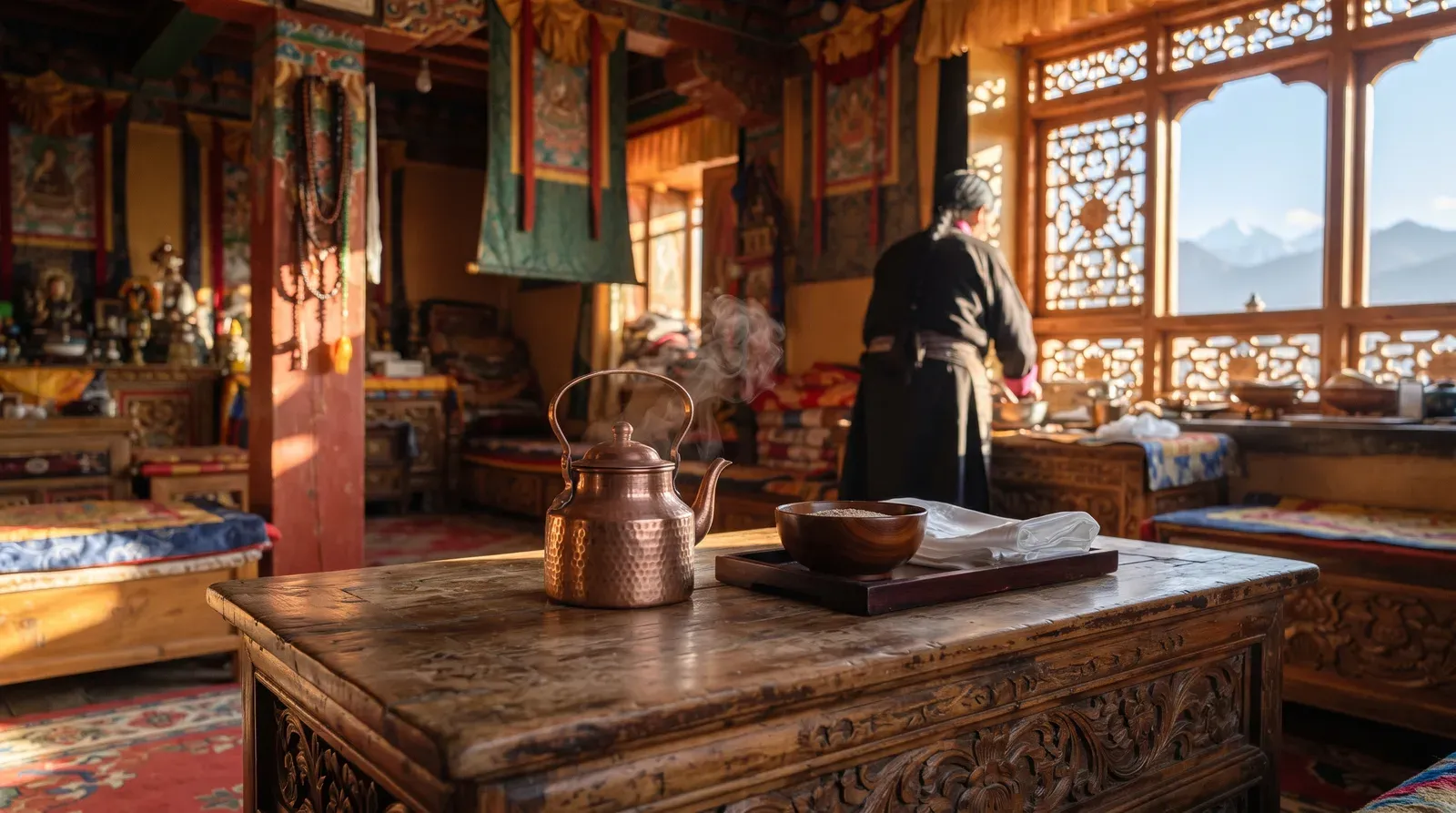
When traveling in Tibet, China, understanding local etiquette is key to respecting the culture. According to the seventh national population census in 2020, the Tibetan ethnic group accounted for 3,137,900 permanent residents in the Tibet Autonomous Region. From the direction of prayer walks and tea customs to annual festivals, these traditions shape daily life and pilgrimage routines.
Where are Tibetan ethnic groups mainly distributed, and what are their dialects?
Tibetans mainly live on the Qinghai-Tibet Plateau, speak the Tibetan language, and call themselves Bodpa. According to the 2020 seventh national population census, the Tibetan population in China was 7,060,700, distributed across five provincial-level regions: Tibet, Sichuan, Qinghai, Gansu, and Yunnan. Officially designated autonomous areas include the Tibet Autonomous Region; six prefectures in Qinghai (Haibei, Hainan, Huangnan, Golog, Yushu, and Haixi); two prefectures and one county in Sichuan (Aba, Garze, and Muli County); Gannan Prefecture and Tianzhu County in Gansu; and Diqing Prefecture in Yunnan.
The Tibetan language is divided into three dialects: U-Tsang, Kham, and Amdo. U-Tsang and Amdo differ greatly, while Kham lies between them and is closer to U-Tsang. The written Tibetan script is an abugida. It is said to have been created in the 7th century by Thonmi Sambhota based on Sanskrit (another account traces it to the Zhangzhung script), written horizontally from left to right. Most Tibetans practice Tibetan Buddhism, while a notable portion follows the native Bon religion, alongside small numbers of Tibetan Muslims and Christians.
How should you visit a home and receive tea in Tibet, China?
When visiting a Tibetan family, guests usually receive a white khata upon entering, which symbolizes welcome and respect. A khata is a silk scarf presented during births, weddings, funerals, graduations, arrivals, and departures. Golden-yellow khatas also exist. White stands for the giver's pure heart. Presenting it to visitors expresses welcome, while offering it as a farewell gift wishes them a safe journey.
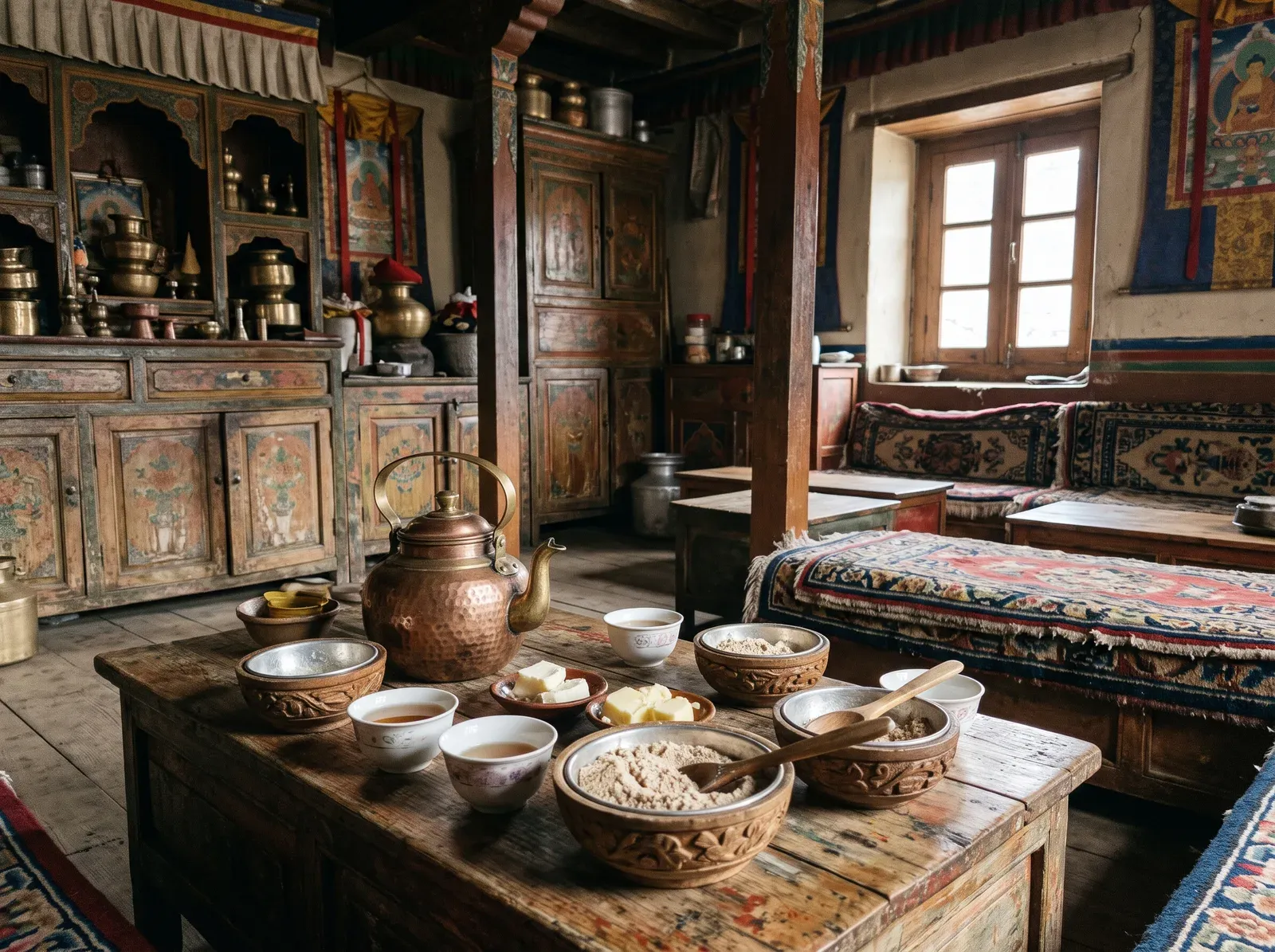
When serving tea, the host presents the cup with both hands. By custom, the guest politely declines at first rather than taking it right away. After accepting the cup, take a small sip and set it down. The host refills it and invites you to drink again. After this happens twice, the guest finishes the tea slowly. People usually sit cross-legged. Stretching your legs out is considered impolite, and stepping over others should also be avoided. A common greeting when meeting is Tashi Delek, meaning good fortune and auspicious wishes.
What are the directional rules for kora and pilgrimage?
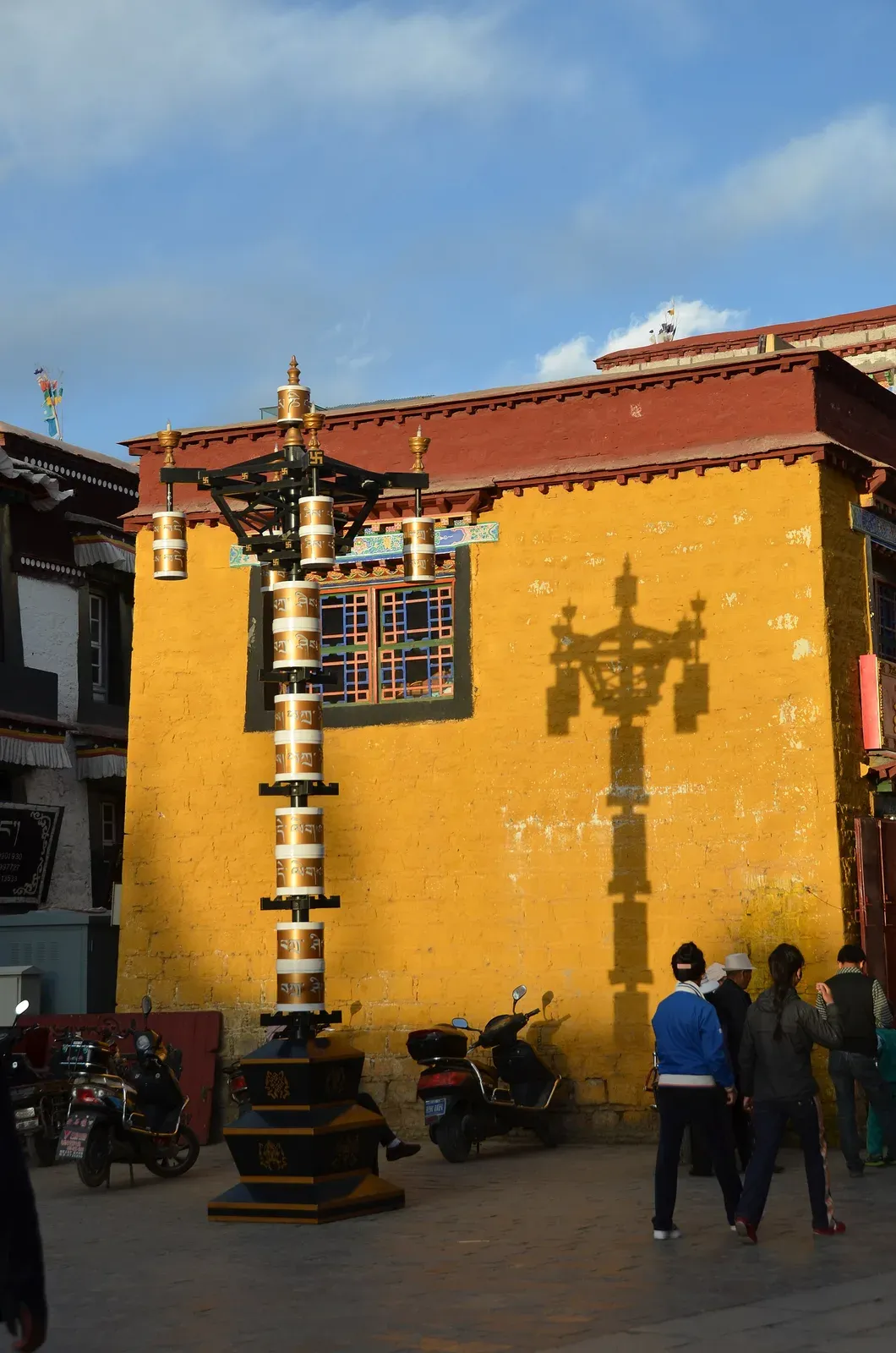
Tibetan Buddhists walk clockwise around stupas, mani stones, and temples, while followers of Bon walk counterclockwise. Prayer wheels, which simulate chanting mantras by spinning the cylinder clockwise several times, are common throughout Tibetan regions. Mani stones are smooth stones or slabs carved with the six-syllable mantra, Buddha images, mantras, or ritual implements. They are often arranged in mounds and should not be stepped on or moved.
In Lhasa's old town, Barkhor Street circles Jokhang Temple as a one-way pilgrimage route. It measures about 1,000 meters around, with market origins dating to the 7th century. Walking follows the same direction as the prayer wheels turning clockwise. Devotees often prostrate every three steps along the street. When encountering pilgrims, travelers should leave a clear path and follow along in the same clockwise direction.
What are Tibetan dietary habits and traditional food taboos?
Tsampa, made from roasted highland barley ground into flour, is the Tibetan staple food. It is often mixed with strong tea, butter, dried curd, or sugar, and is easy to carry and store. Butter tea is considered the national drink, and Tibetans usually add salt rather than sugar to their tea. During festive gatherings such as Losar, highland barley wine is also served.
Traditionally, Tibetans avoid eating horse meat, dog meat, vulture meat and eggs, as well as fish and shrimp. However, a few areas in Tibetan regions have a tradition of eating fish, and the share of young people who eat fish is rising. When visiting a Tibetan home or dining at local traditional restaurants, simply stay aware of and respect these dietary habits.
What etiquette and distance should you maintain regarding sky burials?
Sky burial is the most common funeral practice among Tibetans. After death, the body is kept for several days before being taken to a burial platform. An undertaker dismembers the remains, mixes them with tsampa, and calls vultures to consume them. Folklore considers it auspicious if nothing is left behind. The term sky burial is an outside word; Tibetans themselves call it giving alms to birds or taking to the mountain. Besides sky burials, Tibetan areas also practice earth burial, water burial, cremation, and stupa burial reserved for grand Living Buddhas.
Sky burials are usually attended only by those who personally knew the deceased and are not public tourist performances. Travelers should not visit burial platforms to watch, disrupt rituals, take photos, or record videos. If you encounter a funeral procession on the road, keep quiet and step aside.
When do major traditional Tibetan festivals take place?
The Tibetan calendar is lunisolar, and the Tibetan New Year (Losar) falls in February or March on the Gregorian calendar. Celebrations last 15 days, with main activities during the first three days. Due to differences in leap months and day counts, Losar may coincide with the Lunar New Year, or differ by one day, one month, or one month and one day. For example, Losar in 2025 was celebrated from February 28 to March 2, marking the Wood Snake year. During Losar, the Tibet Autonomous Region usually takes 7 days off, while other Tibetan autonomous areas take 1 to 3 days off.
During the festival, families prepare a chemar box. This wooden container holds roasted wheat grains on one side and butter tsampa on the other, topped with ears of barley and colored flowers made of butter. Relatives and friends visit to exchange khatas, greeting each other with Tashi Delek and Losar Sang (Happy New Year). Gatherings feature Tibetan opera and the Guozhuang dance. Tibetan opera was created by the Kagyu monk Thangtong Gyalpo, traditionally performed with masks accompanied solely by drums and cymbals. In the Guozhuang dance, men and women form circles to sing and dance in a clockwise direction.
| Festival | Tibetan Calendar Date | Main Activities | Regional and Background Details |
|---|---|---|---|
| Losar (Tibetan New Year) | 1st to 3rd of the first month for core celebrations | Making chemar, exchanging khatas, drinking barley wine, performing Tibetan opera and Guozhuang dance | Celebrated widely across Tibetan areas; Tibet Autonomous Region usually takes 7 days off |
| Kongpo Losar | 1st of the tenth month | Folk celebrations in traditional farming and forestry areas | New Year in the Kongpo region (around modern Nyingchi) |
| Sonam Losar (Farmers' New Year) | 1st of the twelfth month | Farming celebrations and family gatherings | Celebrated early by farmers in Tsang, centered around Shigatse |
| Saga Dawa | 15th of the fourth month | Religious pilgrimages and kora circuits | Major religious festival in Tibetan Buddhism |
| Shoton Festival | 15th to 24th of the fifth month (English Wikipedia) / 1st of the seventh month (Chinese Wikipedia) | Tibetan opera and singing performances at Norbulingka, ending monks' summer retreat | Developed into a major traditional arts festival, mainly in Lhasa |
| Dama Festival | Fifth month | Horse racing and archery competitions | Pastoral festival in herding areas around Gyantse |
What are the visiting rules for Lhasa's core World Heritage sites?
UNESCO inscribed the Potala Palace on the World Heritage List in 1994, adding Jokhang Temple in 2000 and Norbulingka in 2001 as extensions. The core World Heritage area covers 60.5 hectares, with a buffer zone of 198.8 hectares. Lhasa city sits at an altitude of 3,663.5 meters, while the Potala Palace stands on Red Hill at an altitude of 3,700 meters.
The Potala Palace opens at 09:30 and closes at 15:40, with no same-day ticket sales. All visitors require real-name booking with facial verification. Bookings via the mini-program require 10 days in advance, while on-site bookings require 1 day in advance. The Potala Palace administration announced that it is closed on Mondays, so itineraries need to avoid Mondays. Inside Jokhang Temple, more than 3,000 statues of Buddhas and deities are enshrined, and visitors likewise follow a clockwise direction.
| Site | Opening and Closing Rules | Booking Regulations | Architectural Scale and Highlights |
|---|---|---|---|
| Potala Palace | Opens at 09:30, closes at 15:40; closed on Mondays | No same-day tickets; real-name booking plus facial verification; 10 days in advance via mini-program or 1 day in advance on site | Altitude of 3,700 meters, Red Palace and White Palace complex |
| Jokhang Temple | Hours follow scenic area and monastic management committee rules | Subject to on-site and official Lhasa real-name booking channels | Covers about 2.5 hectares, enshrines over 3,000 statues inside |
| Norbulingka | Hours follow garden and scenic area notices | Real-name ticket purchase | Garden area of 36 hectares, four palace complexes and monasteries |
What exceptions and prerequisites apply when visiting Tibet to learn about local customs?
Non-Chinese travelers visiting Lhasa in Tibet are subject to special regulations. Under current rules, non-Chinese passport holders need to obtain a Tibet Travel Permit (special permit) in advance and be accompanied by qualified personnel throughout their stay in Tibet. If you need a private guide, a separate licensed guide, arranged by your travel designer on request, can be provided in Chinese or English.
The Tibetan region is vast, and customs vary across areas. Festival dates and dialects differ among Kongpo, Tsang, Kham, and Amdo, while this article mainly focuses on Lhasa and the U-Tsang area. At the same time, lifestyle habits in modern towns and among younger generations are shifting, such as more people eating fish, and traditional taboos are observed to varying degrees among different groups. Opening rules for temples and scenic sites are subject to the latest announcements by official management offices.
Sources
Lhasa - Wikipedia
Historic Ensemble of the Potala Palace, Lhasa
Lhasa - Wikipedia
Tibetans - Wikipedia
Tibetan People - Wikipedia
Barkhor - Wikipedia
Khata - Wikipedia
Tibetan cuisine - Wikipedia
Sky burial - Wikipedia
Losar - Wikipedia
Tibetan New Year - Wikipedia
Sho Dun Festival - Wikipedia
Tibetan culture - Wikipedia
Official Website of the Potala Palace
The sources above were verified on November 17, 2026.
FAQ
Are the Tibetan New Year and the Lunar New Year always on the same day?
Not necessarily. The Tibetan calendar is lunisolar, and Losar falls in February or March on the Gregorian calendar. Due to differences in leap months and day counts, Losar may coincide with the Lunar New Year, or differ by one day, one month, or one month and one day.
Why can't you walk counterclockwise on Barkhor Street?
Barkhor Street surrounds Jokhang Temple and measures about 1,000 meters around as a one-way pilgrimage route. Tibetan Buddhist tradition requires walking in the same clockwise direction as the spinning of prayer wheels. Only Bon followers walk in the opposite direction. When entering Barkhor Street, please walk clockwise.
Can you buy same-day tickets to enter the Potala Palace?
No. The Potala Palace does not sell same-day tickets, and all visitors must book under their real names with facial verification. Bookings via the mini-program require 10 days in advance, while on-site bookings require 1 day in advance. The Potala Palace is also closed on Mondays.
What rules should you follow when drinking tea at a Tibetan home?
When the host presents tea with both hands, custom dictates that guests politely decline at first instead of accepting right away. After taking the cup, take a small sip and put it down. The host refills it and urges you to drink again. After this repeats twice, the guest finishes the tea slowly. While seated, sit cross-legged; do not stretch out your legs or step over others.
What are the exact dates for the Shoton Festival?
Outside sources record different dates: English Wikipedia records it from the 15th to the 24th of the fifth Tibetan month in summer (usually mid-August), while Chinese Wikipedia records it on the 1st of the seventh Tibetan month with Tibetan opera at Norbulingka in Lhasa. Travelers should verify the festival schedule officially announced for Lhasa before their trip.