
How to Travel Anhui: Huangshan, Hongcun, and Classic Itineraries
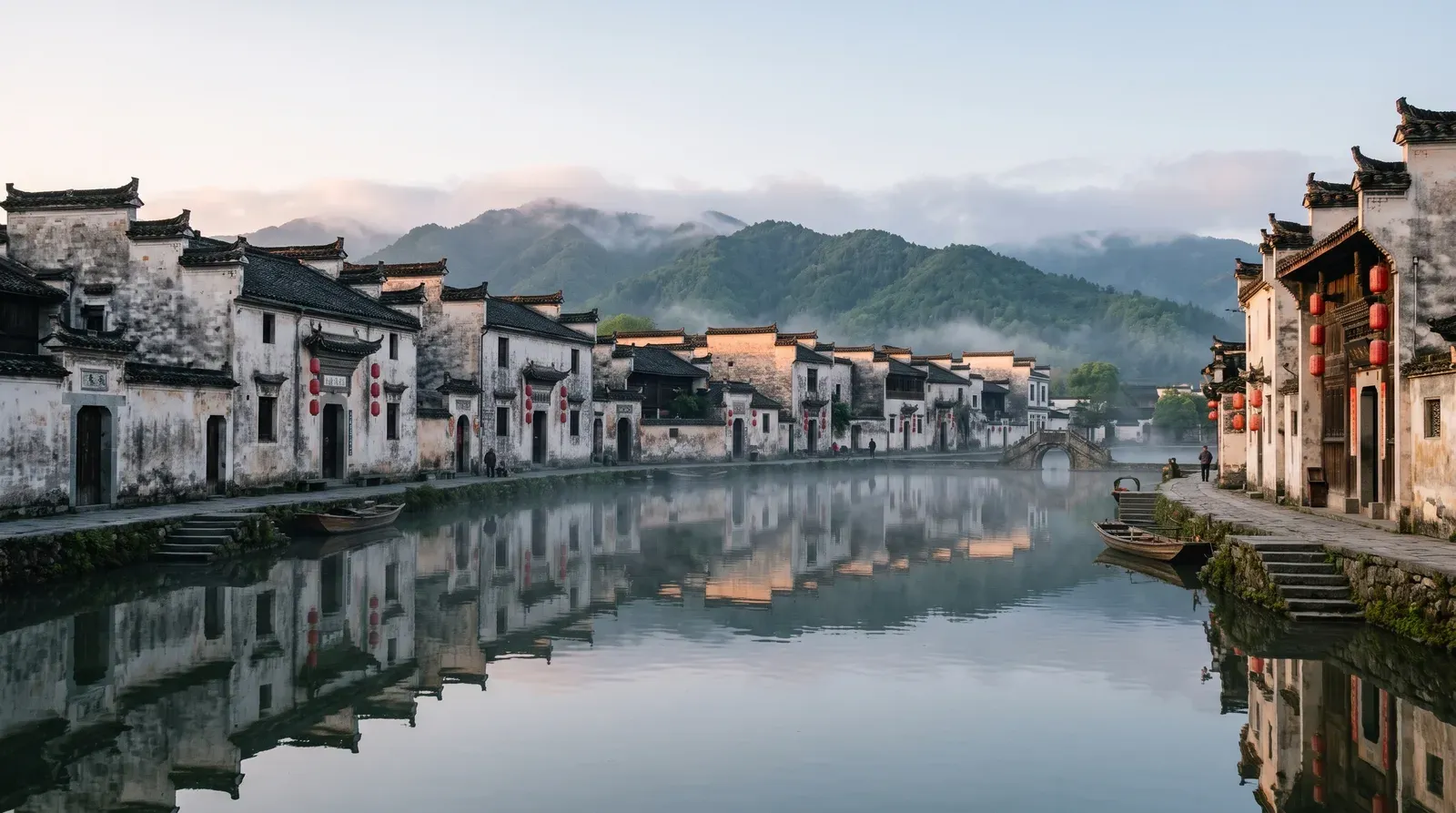
The most classic destinations in Anhui are Mount Huangshan and Hongcun in the southern part of the province. A one-way high-speed train trip from Shanghai to major cities in the province takes less than 3 hours. When planning a route for Mount Huangshan and Hongcun, travelers usually arrive at Huangshan North railway station by bullet train, transfer to the Tangkou Town transit center for the designated park shuttle bus, and head up the mountain to see the three main peaks and the Xihai Grand Canyon. After coming down, they continue to Yi County to explore the ancient village of Hongcun. Lotus Peak, the highest summit of Mount Huangshan, reaches 1,864 meters above sea level, while Hongcun was inscribed as a UNESCO World Cultural Heritage site in 2000.
Which iconic mountains and geographic regions define the province?
According to geographical divisions, the Yangtze River and Huai River cross the province, dividing its physical geography and culture into three regions: southern, central, and northern. Well-known mountains within the province include Mount Huangshan, Mount Jiuhua (one of the four sacred mountains of Chinese Buddhism), Mount Tianzhu, and the Dabie Mountains. UNESCO records show that Mount Huangshan is often called "the loveliest mountain of China," and received its name Huangshan in 747 AD during the Tianbao era of the Tang Dynasty based on legends of the elixir of immortality.
What are the main sights and peak elevations of Mount Huangshan?
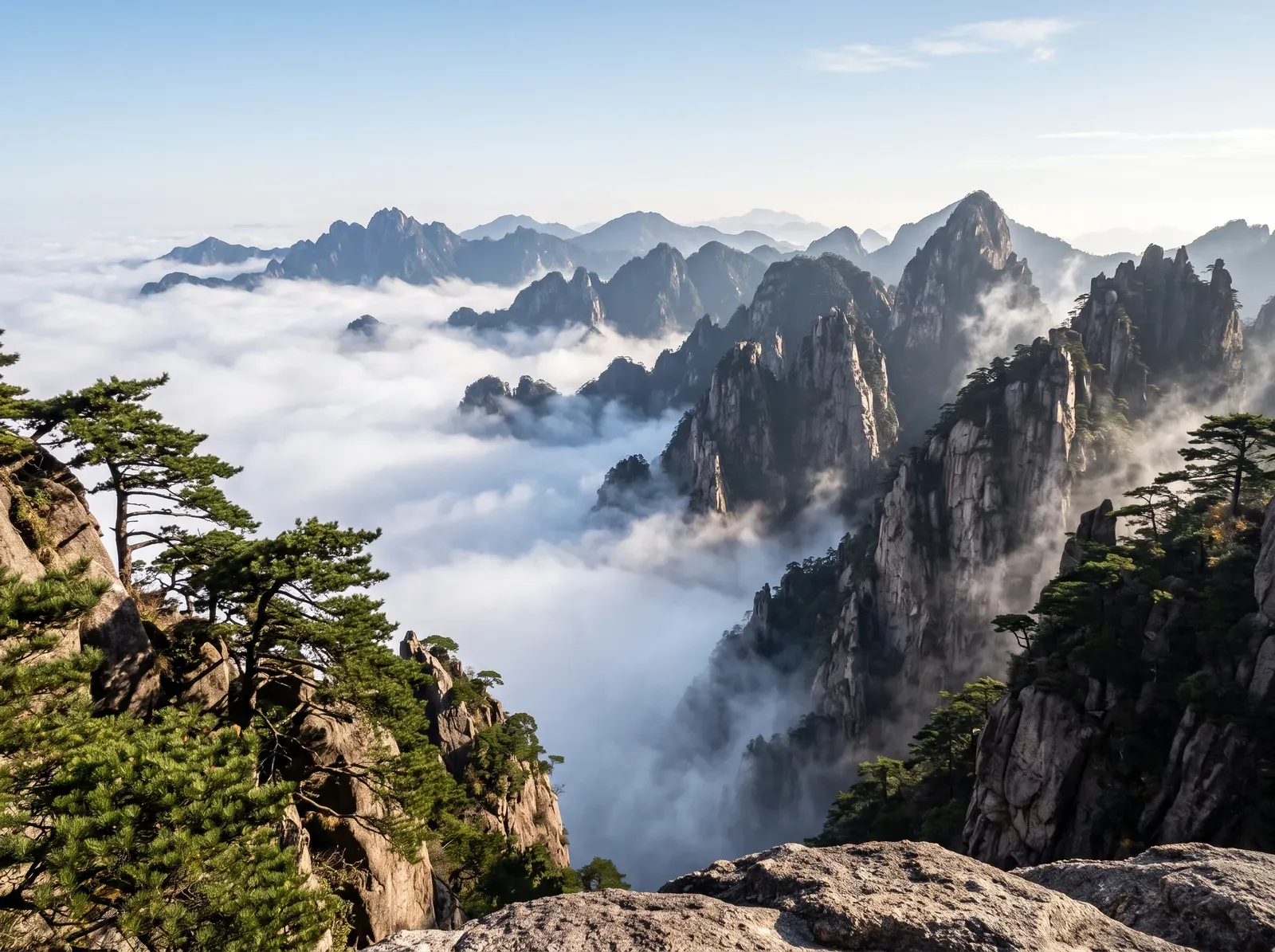
According to statistics, there are 77 peaks above 1,000 meters in the core area of Mount Huangshan, and all three main peaks stand above 1,800 meters. Lotus Peak, the highest, reaches 1,864 meters; Bright Summit, a flat and broad high peak, stands at 1,860 meters; and Tiandu Peak, known for its steepness, rises to 1,810 meters. In addition, the Xihai Grand Canyon is known for its rugged scenery, connected between the canyon floor and the mountain ridge by a ground track funicular.
Mount Huangshan experiences cloudy and misty weather on more than 250 days a year. Because of this, place names in the scenic area evolved into the West Sea, East Sea, North Sea, South Sea, and Heavenly Sea. Travelers who visit the mountain to watch the sunrise and sunset often choose to spend the night at hotels in the Beihai area on the summit.
How do you choose between hiking trails and cable cars on Mount Huangshan?
Hiking routes on Mount Huangshan divide into two main trails: the front mountain and the back mountain. The front mountain "west trail" from Ciguang Pavilion or Yuping Cable Car spans about 14 kilometers, taking about 6 to 7 hours to climb. The back mountain "east trail" from Yungu Cable Car is less demanding, requiring about 2 to 3 hours on foot to ascend. External taxis and private cars cannot drive directly to the trailheads. Visitors must change to the designated National Line shuttle buses at the transit center in Tangkou Town at the foot of the mountain to reach the lower stations of Yuping Cable Car or Yungu Cable Car.
Mount Huangshan admission tickets cost 230 yuan during the peak season and 120 yuan during the off-season, with half-price discounts for students and seniors. A one-way cable car ticket is usually 80 yuan, the scenic shuttle bus between Tangkou and the cable car stations costs 19 yuan one way, and the Xihai Grand Canyon funicular is 100 yuan one way. Hotel rates on the summit are usually noticeably higher than in Tangkou Town at the foot of the mountain.
| Location or Item | Category or Indicator | Value and Details |
|---|---|---|
| Lotus Peak, Mount Huangshan | Elevation of the highest peak | 1,864 meters |
| Bright Summit, Mount Huangshan | Elevation of the broad flat peak | 1,860 meters |
| Tiandu Peak, Mount Huangshan | Elevation of the steep peak | 1,810 meters |
| Core peaks of Mount Huangshan | Peaks over 1,000 meters in elevation | 77 peaks |
| Annual cloudy and misty days on Mount Huangshan | Annual days with clouds and mist | More than 250 days |
| Front mountain west trail (via Ciguang Pavilion) | Total hiking length and ascent time | About 14 kilometers, about 6 to 7 hours |
| Back mountain east trail (via Yungu Cable Car) | Ascent hiking time | About 2 to 3 hours |
| Mount Huangshan admission tickets | Peak and off-season prices | Peak season 230 yuan, off-season 120 yuan |
| One-way cable car and funicular tickets | Cable cars and Xihai Grand Canyon funicular | Cable cars usually 80 yuan, canyon funicular 100 yuan |
| Scenic designated shuttle bus | One-way between Tangkou and cable car stations | 19 yuan |
| Historic building complex in Hongcun | Preserved Ming, Qing, and Republic of China buildings | 1 Ming dynasty, 102 Qing dynasty, 34 Republic of China |
| Chengzhi Hall in Hongcun | Year built and floor area | 5th year of Xianfeng in the Qing Dynasty (1855), about 2,100 square meters |
| Structure of Chengzhi Hall in Hongcun | Rooms, courtyards, and standing wooden pillars | Over 60 rooms, 9 courtyards, 136 wooden pillars |
What are the features and historic highlights of Hongcun and Xidi?
Xidi and Hongcun are located in Yi County, Huangshan City, in the province, and were inscribed on the World Heritage List in 2000. These two villages preserve the layout, landscapes, architectural forms, and building techniques of Huizhou settlements from the 14th to the 20th century. Hongcun retains a large number of ancient buildings from the Ming and Qing dynasties, including 1 building from the Ming Dynasty, 102 from the Qing Dynasty, and 34 from the Republic of China period, forming a classic Huizhou-style residential settlement.
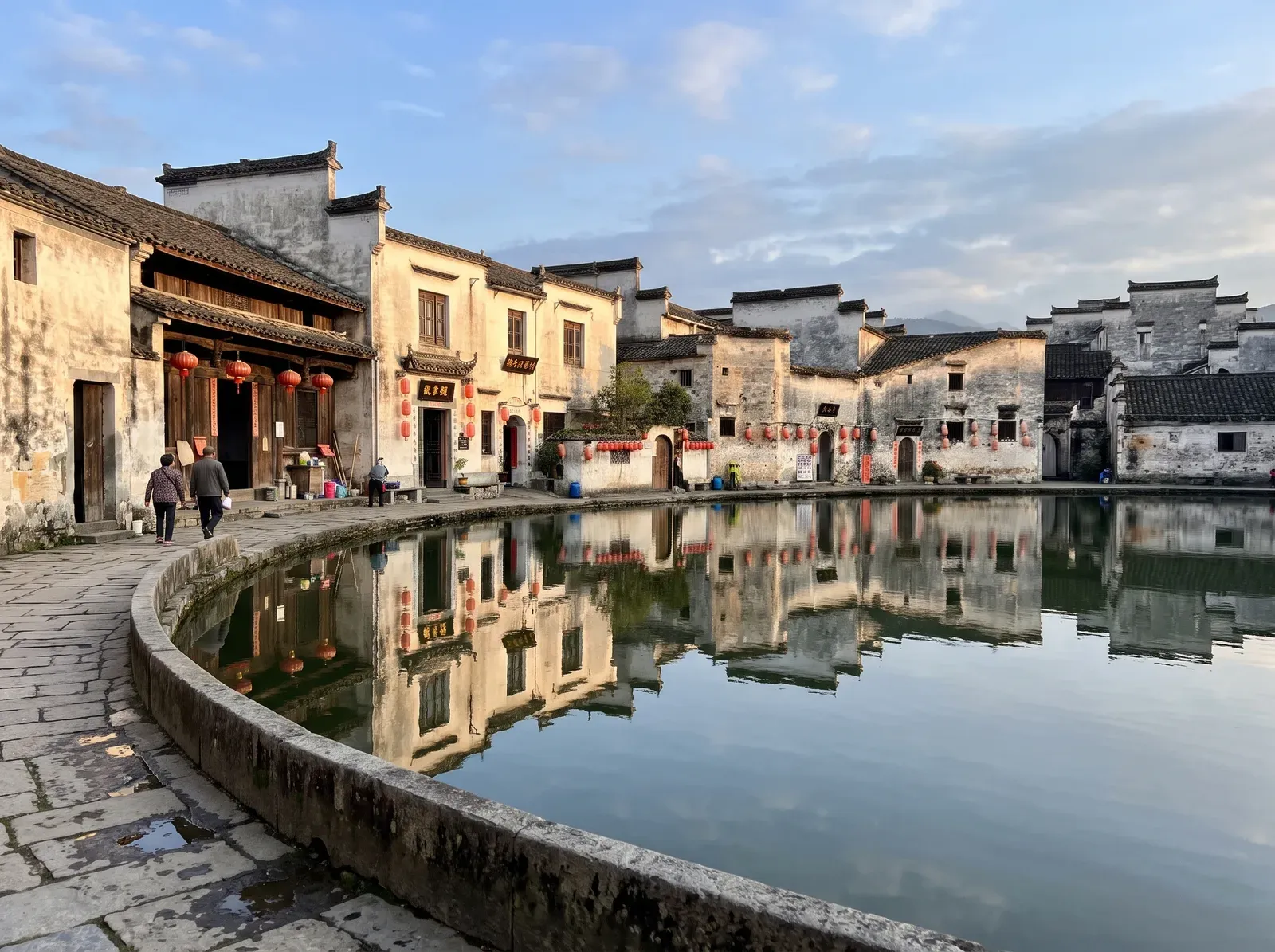
The layout of Hongcun uses a biomimetic "ox-shaped" water network and village plan. Specifically, Leigang Hill forms the head of the ox, two ancient trees at the village entrance serve as the horns, the Moon Pond is the heart, the South Lake is the belly, the water canals are the intestines, and four old bridges act as the legs. Chengzhi Hall, built in 1855 during the fifth year of the Xianfeng reign in the Qing Dynasty, was the residence of a wealthy salt merchant. It covers about 2,100 square meters, contains more than 60 rooms and 9 open courtyards, and features 136 standing wooden pillars alongside ornate wood carvings on beams and lintels.
How do you connect transportation to Mount Huangshan and the scenic spots?
Huangshan North railway station operates high-speed train services to major Chinese cities such as Beijing, Shanghai, Guangzhou, Fuzhou, and Nanchang. After exiting the station, travelers can walk to the tourist bus terminal on the right side of the station to catch a coach to Tangkou Town at the base of Huangshan. If transfer and guiding services are needed, your travel designer can plan the itinerary and arrange your driver, and a separate licensed guide (Chinese or English) can also be arranged by your travel designer on request.
For dining, hairy tofu (maodoufu), a traditional Huizhou specialty snack, is a fermented tofu covered with white fuzz and serves as a representative local delicacy. When visiting Huangshan, accommodation prices on the summit are usually significantly higher than in Tangkou Town at the base of the mountain.
What should you know before visiting Mount Huangshan and Hongcun?
External taxis and private vehicles cannot drive up to the trailheads; all visitors must transfer to the designated National Line shuttle buses at the Tangkou Town transit center. Because Mount Huangshan has cloudy and misty weather on more than 250 days a year, paths become slippery in rain, snow, or heavy fog, making non-slip shoes and warm layers essential for hiking. In addition, the front mountain west trail covers about 14 kilometers and takes 6 to 7 hours, so travelers with limited stamina are advised to use the east trail or ride the cable cars up and down the mountain.
Sources
Mount Huangshan - UNESCO World Heritage Centre
Huangshan - Wikipedia
Ancient Villages in Southern Anhui: Xidi and Hongcun - UNESCO World Heritage Centre
Hongcun - Wikipedia
Anhui Province - Wikipedia
Sources verified on November 7, 2026
FAQ
How long does the high-speed train take from Shanghai to Mount Huangshan?
A one-way high-speed train journey from Shanghai to major cities in the province takes less than 3 hours. After arriving at Huangshan North railway station, you can transfer directly to a bus heading to Tangkou Town at the tourist coach station right outside the exit.
How much do tickets and cable car passes cost at Mount Huangshan?
Mount Huangshan scenic area tickets cost 230 yuan in peak season and 120 yuan in off-season, with half-price discounts available for students and seniors. Cable car tickets are usually 80 yuan one way, the designated shuttle bus from Tangkou transit center to the cable car stations costs 19 yuan one way, and the Xihai Grand Canyon funicular is 100 yuan one way.
Why is Hongcun described as an ox-shaped village layout?
Hongcun uses a biomimetic ox-shaped layout in its water system and village design: Leigang Hill represents the head of the ox, two ancient trees at the village entrance serve as the horns, the Moon Pond is the heart, the South Lake is the belly, the water canals are the intestines, and four old bridges act as the legs.
Which famous mountains besides Mount Huangshan are in the province?
Well-known mountains in the region include Mount Jiuhua (one of the four sacred mountains of Chinese Buddhism), Mount Tianzhu, and the Dabie Mountains. The Yangtze River and Huai River cross the province, dividing it into southern, central, and northern regions.